Quick Summary: What This Blog Covers
Learn what causes hard water stains on auto glass, the safest and most effective ways to remove them, and simple prevention tips to keep your windshield and windows crystal clear. This guide also explains when DIY methods are enough and when professional treatment is the better option.
Introduction
Your windshield and windows look cloudy and gross. You wash them and they still look cloudy. You wash them again and nothing changes. That cloudy haze is hard water stains and they are basically impossible to remove with regular glass cleaner.
Hard water stains are mineral deposits left behind when water evaporates. Calcium and magnesium particles stick to your glass. Regular cleaning does not touch them. You can scrub and spray until your arms hurt and those stains stay right there mocking you.
Most people have no idea what they are actually looking at. They think their glass is dirty. They think their windows are damaged. They do not realize they are dealing with hard water stains that require completely different removal methods than regular dirt.
The frustration is real. Your car looks neglected even though you wash it regularly. Your visibility gets compromised. Your car just looks bad. But hard water stains are actually totally fixable. You just need to know the right methods and the right products to actually get rid of them.
Mobile Tech Auto Glass deals with hard water stain removal constantly. The team knows which methods work and which ones waste your time. The team knows the products that actually get stains off without damaging your glass. This guide walks you through exactly how to remove hard water stains from your auto glass so your windows look crystal clear again.
Understanding what hard water stains actually are
Hard water stains are mineral deposits. They are not dirt. They are not damage. They are minerals left behind when water evaporates from your glass.
Water contains minerals like calcium and magnesium. When water evaporates from your windshield or windows, those minerals stay behind. Multiple times of this happening creates a buildup. That buildup is what you see as a cloudy hazy layer on your glass.
The minerals bond to the glass surface chemically. They are basically fused to the glass. This is why regular washing does not remove them. Water and soap cannot dissolve mineral bonds. You need different chemistry to break those bonds.
Why hard water stains are so stubborn
Regular glass cleaners contain water and soap. Neither of these breaks the mineral bond holding hard water stains to your glass. That is why spraying your windshield with Windex or generic glass cleaner does nothing to hard water stains.
The stains feel rough to your fingernail when you touch them. That roughness is the mineral buildup. The buildup sits on top of your glass. It is not just a film you can wipe away.
Hard water stains are worse in areas with harder water. If your local water supply is high in minerals, you are going to get more stains faster. Conversely, areas with softer water get fewer stains.
Your location affects how often you deal with this
If you live in an area with hard water, you deal with hard water stains constantly. Rain water is actually relatively soft but the residue from your car being washed with hard tap water sits on your glass and creates stains.
People in areas with very hard water often deal with this problem monthly. People in areas with soft water might never see hard water stains. Your geography determines whether this is an occasional annoyance or a constant problem.
Mobile Tech Auto Glass helps customers in hard water areas understand that this is a maintenance issue, not a glass defect.
Vinegar is your first line of defense
White vinegar is actually one of the best solutions for hard water stains. The acid in vinegar dissolves the mineral bonds holding stains to your glass.
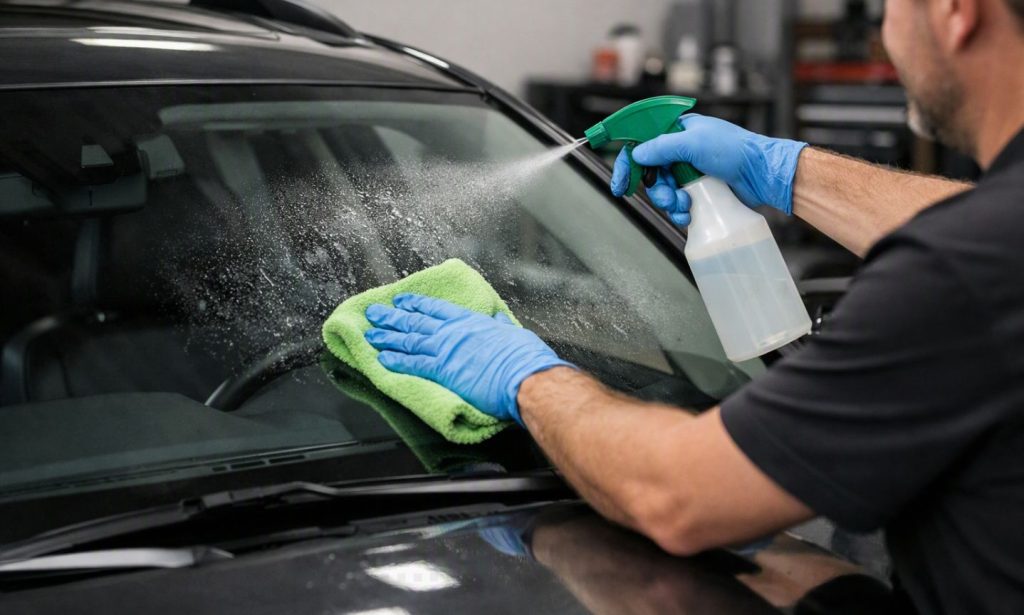
Pour undiluted white vinegar into a spray bottle. Spray your windshield or windows thoroughly. Let it sit for a few minutes so the acid has time to work on the mineral deposits. Wipe with a microfiber cloth. Rinse with clean water.
The vinegar smell is strong but it dissipates quickly. Your windows will be crystal clear after this treatment. The stains basically dissolve when the acid hits them.
This works great for moderate hard water stains. For really heavy buildup you might need to let the vinegar sit longer or do multiple applications.
White vinegar versus other vinegars
White vinegar works best because it is pure acid with minimal other ingredients. Apple cider vinegar or other vinegars contain additional compounds that can leave their own residue on your glass.
Do not use cleaning vinegar which is stronger. It can damage some glass treatments. Stick with regular white vinegar which is gentle enough for auto glass.
The cost is pennies per application making this an incredibly cheap solution for a serious problem.
Rubbing alcohol removes stubborn stains
Rubbing alcohol also works on hard water stains. The alcohol dissolves the mineral deposits differently than vinegar does.
Mix equal parts rubbing alcohol and water in a spray bottle. Spray your glass generously. Let it sit for a minute. Wipe with a microfiber cloth. The stains wipe away.
Rubbing alcohol works especially well on really baked on stains that vinegar alone cannot handle. The combination of vinegar and rubbing alcohol is even more powerful than either one alone.
Rubbing alcohol also evaporates quickly so there is no leftover residue like there sometimes is with vinegar.
According to research from Car and Driver, white vinegar and rubbing alcohol are the most effective chemical free solutions for hard water stains, with success rates exceeding 85 percent on moderate stains when applied properly.
Specialized hard water stain removers work faster
Several products are specifically designed for hard water stain removal. Invisible Glass makes a hard water stain remover. Stoner Inc makes products that target mineral deposits.
These specialized products work faster than vinegar or alcohol. They are formulated specifically to dissolve mineral bonds. You spray on, let sit briefly, wipe off and you are done.
Specialized removers cost more than vinegar but they work more reliably on really stubborn stains. If you deal with hard water stains constantly, keeping a bottle of specialized remover on hand makes sense.
Mobile Tech Auto Glass recommends specific products that work well on auto glass without damaging treatments or coatings.
Clay bar method for heavy buildup
For really severe hard water stain buildup, a clay bar works incredibly well.
A clay bar is basically a detailing clay that you use with water and lubricant to gently remove surface contamination. The clay physically lifts off the hard water stains instead of just dissolving them.
Wet your glass with water and lubricant. Rub the clay bar gently over the stains in circular motions. The stains gradually come off. Wipe clean and finish with glass cleaner.
This method takes more effort than spraying with vinegar but it works on stains that nothing else can touch. Heavy mineral buildup that has been building for months responds well to clay bar treatment.
Be gentle with the clay bar. Do not scrub hard. Let the clay do the work with light pressure.
Preventing hard water stains is easier than removing them
Removing hard water stains is doable but prevention is easier. Several strategies keep stains from building up in the first place.
Dry your glass immediately after washing
Water spots and hard water stains form when water sits on your glass and evaporates. Dry your glass immediately after washing to prevent this.
Use microfiber towels to dry thoroughly. Do not let water air dry. Active drying prevents mineral deposits from forming.
This simple step prevents most hard water stains if you do it consistently.
Use filtered or distilled water for washing
Hard water creates hard water stains. Soft water does not. Use filtered or distilled water when washing your car.
Distilled water is especially good because it has essentially no minerals. Washing with distilled water prevents stains from forming.
This costs a bit more but if you are in a hard water area, using filtered water is cheaper than constantly fighting stains.
Ceramic coatings provide protection
Ceramic coatings create a protective layer on your glass. This coating makes it harder for mineral deposits to bond to the glass surface.
Water beads up and rolls off treated glass instead of sitting and evaporating. This dramatically reduces hard water stain formation.
Ceramic coatings cost more upfront but save you from constant hard water stain battles long term.
Mobile Tech Auto Glass applies ceramic coatings to windshields and windows specifically for hard water stain prevention.
Squeegee your windshield regularly
After it rains or when moisture sits on your windshield, use a squeegee to remove the water. This prevents water from sitting and evaporating.
A simple car windshield squeegee costs a few dollars and prevents hours of stain removal work.
Avoiding damage while removing stains
Some methods for removing hard water stains can actually damage your glass if you are not careful.
Do not use abrasive scrubbing pads or rough materials. Microfiber cloths are best. Soft materials prevent scratching.
Do not use acidic solutions on glass with special coatings or tints. Some treatments do not handle strong acids well. Check your glass type before using vinegar or alcohol.
Do not scrape your glass with metal tools. Scratches are worse than stains. Stick with soft removal methods.
Be gentle with sensitive glass
Some vehicles have rain sensors or heads up display optics on the windshield. These features do not like harsh chemicals. Vinegar is usually safe. Rubbing alcohol is usually safe. But check with your vehicle manual to be sure.
If you have special glass features, use gentler methods and products specifically approved for your glass type.
Professional help when DIY fails
If you have tried everything and your stains are still there, professional help exists.
Glass detailing shops have access to more aggressive products and equipment. They can remove stains that home methods cannot touch.
Professional hard water stain removal costs usually runs 50 to 150 dollars depending on severity. That is way cheaper than replacing your windshield or windows.
Mobile Tech Auto Glass can remove even the worst hard water stains professionally if your home efforts do not work.
Maintaining clear glass long term
Once you remove hard water stains, keeping your glass clear requires ongoing attention.
Dry your glass when it gets wet. Use filtered water for washing. Apply protective coatings if you are in a hard water area. Keep vinegar or rubbing alcohol on hand for quick touch ups when stains start forming.
Hard water stains are preventable and manageable with the right approach. They do not have to be a permanent problem.
Your clear windshield is achievable
Hard water stains are frustrating but totally fixable. You do not have to live with cloudy hazy glass. You do not have to accept stains as permanent.
Try vinegar first. It is cheap. It works. It is already in your house. If vinegar does not work completely, move to rubbing alcohol. If you need more power, get a specialized remover.
For really stubborn stains, a clay bar or professional help gets the job done.
Your windshield can be crystal clear again. It just takes knowing the right method for your specific stain situation.
Mobile Tech Auto Glass can help with hard water stain removal if your home methods are not working. Schedule your glass treatment today and get your windshield and windows looking crystal clear again.
Common questions about removing hard water stains from auto glass
Why does vinegar work on hard water stains when regular cleaner does not?
Vinegar contains acetic acid which dissolves the mineral bonds holding hard water stains to your glass. Regular glass cleaners contain soap and water which cannot dissolve mineral deposits. The acid is what breaks the chemical bond. This is why acidic solutions work when regular cleaners fail.
Can hard water stains damage my windshield permanently?
No. Hard water stains are surface mineral deposits. They do not damage the glass itself. They are purely cosmetic. Removing them restores your glass to perfect condition. The only risk is scratching your glass while removing stains if you use abrasive methods.
How often do I need to remove hard water stains?
It depends on your local water hardness and how often your car gets rained on or washed. In areas with very hard water, you might deal with this monthly. In areas with soft water, you might never see stains. Once stains form, remove them as soon as you notice them. Early removal is easier than dealing with heavy buildup.
Will hard water stains come back after I remove them?
Yes they will eventually if you do not prevent them. Hard water stains form again when water with minerals sits on your glass and evaporates. Prevention methods like drying thoroughly and using distilled water keep stains from returning. Ceramic coatings also slow stain formation significantly.
Are there any methods I should avoid when removing hard water stains?
Avoid abrasive scrubbing pads which can scratch glass. Avoid metal scrapers which damage the surface. Avoid strong acids on special coated glass without checking compatibility first. Avoid letting stain removal products sit too long on your glass. Be gentle and let chemistry do the work instead of using force.