Quick Blog Summary
Rain sensors help automatic windshield wipers adjust to changing rainfall. Dirt, damaged glass, wiring faults or incorrect installation can cause problems, with rain sensors and windshield wipers.
Cleaning the glass. Checking the sensor after windshield replacement may resolve many issues for rain sensors and windshield wipers.
If windshield wipers continue acting a technician can inspect the sensor and its connections to restore proper operation of rain sensors and windshield wipers.
Introduction
It starts with a drizzle. You flip the wipers on. They begin moving across the windshield. Then the rain comes down harder. You press the stalk or hit the button again. A week later you notice the wipers keep running when the windshield is dry. Or worse they stay still in the middle of a downpour. That’s when you start wondering if something is broken.
Most of the time the problem isn’t the wipers. It’s the rain sensor hidden behind the rearview mirror. We see this all the time at Mobile Tech Auto Glass. Customers call in with wiper behavior after a windshield replacement or after a rock chip, near the top of the glass. People don’t usually think about the sensor until it stops working.
So let’s look at what the rain sensor is. How it works.. Why it often fails when you need it most.
What a rain sensor actually is
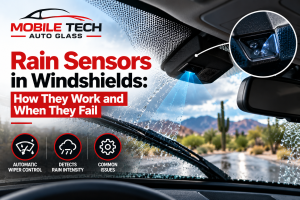
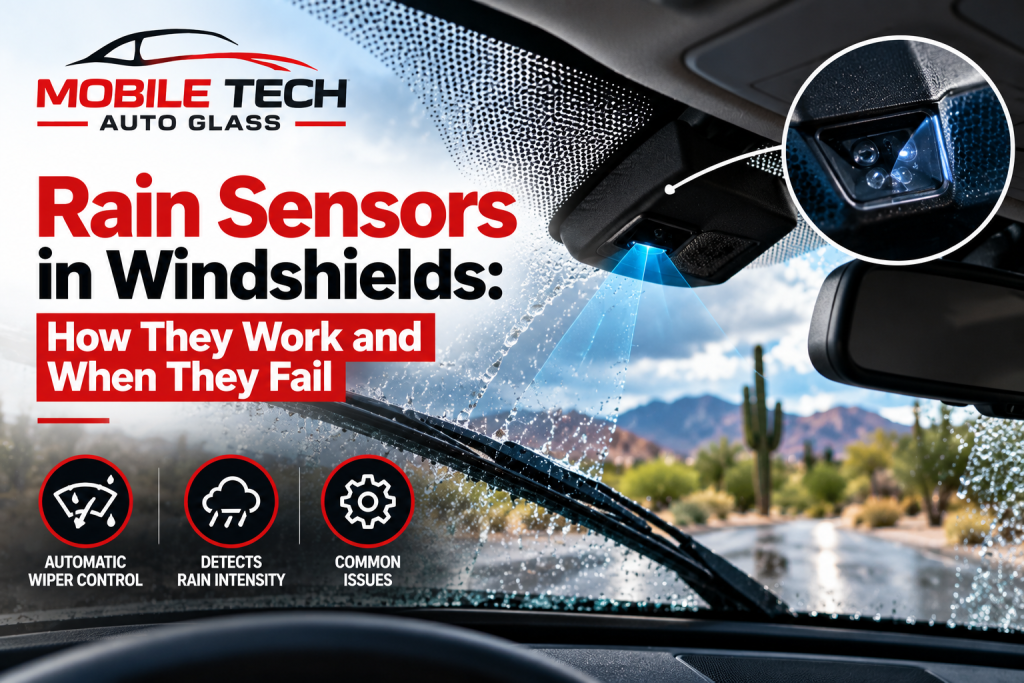
Think of it as an eye that looks at your windshield. It sits on the inside of the glass near the rearview mirror and it sends a beam of infrared light toward the outside surface. When the glass is dry most of that light bounces back, to the sensor in a pattern. When water lands on the glass some of the light. The sensor sees less light come back.
That change tells the cars computer how much rain is falling. More water means the wipers speed up. A light drizzle means sweeps. No water means they stay off. It sounds fancy. The idea is pretty simple. Light goes out light comes back. The amount that comes back tells the story.
Some cars have one sensor. Others, higher-end models use more advanced setups that also manage headlights and sometimes the defroster.
Why the mirror spot matters
The sensor needs a clear view through a specific patch of glass. That’s why it usually sits right behind the mirror. The glass in that area is often coated or treated so the light passes through cleanly. If anything blocks that patch, the sensor gets confused.
How the sensor talks to your wipers
Here’s how it works one step at a time. The sensor picks up the light that bounces back from the windshield. It sends that info to the car’s body control module or, to a rain sensor module. That module checks the signal. Figures out how fast the wipers need to go. Then it tells the wiper motor to start moving at that speed. All of this happens fast. In just a split second. So it feels smooth and natural when it’s working right.
Some systems also take temperature into account. That way if the windshield is freezing the system doesn’t get. Still works properly. Other cars let you turn off the setting and use the wipers manually instead. A more advanced cars even use the same sensor to turn on the headlights when it gets dark or starts raining.
According to the National Highway Traffic Safety Administration, modern vehicle systems rely on sensors and electronic controls that need to work together properly, which is why a problem in one part can affect several features at once.
Common reasons rain sensors fail
Here’s where it gets real. Rain sensors are pretty tough, but they are not invincible. Here are the usual suspects we see.
Windshield replacement with the wrong setup
This issue catches people off guard. When a windshield is replaced the sensor often needs to be moved or reattached to the glass. The bracket, adhesive and alignment all matter. If the sensor sits a bit off the light path changes. The wipers might run constantly. Never turn on at all.
A good technician checks the sensor position ensures the sensor is seated correctly and tests the system before handing the car. Skipping that step is one of the reasons we receive callbacks.
Chips, cracks and debris near the sensor
A chip in the wrong spot can scatter light and mess up sensor readings. If a crack runs through the sensor area the beam can become distorted. Even dirt, bugs or a small amount of residue stuck to the glass can cause wiper behavior.
Walk your windshield once in a while. Look for chips behind the mirror. If you spot one tell your technician before it spreads.
Dirty or fogged glass
Dust, fingerprints and film from cleaners build up over time. Inside the car, smoke, vape residue and dashboard sprays can leave a haze. Any of these can change how light moves through the glass. A simple cleaning sometimes fixes what looks like a problem.
Electrical trouble
Sometimes the sensor is fine. The wiring or connector is not. A loose plug, corroded pin or blown fuse can cut power. Send a bad signal. Water getting into the connector area can also cause behavior. If the wipers act up after rain the wiring might be the culprit.
Software and calibration issues
Some vehicles store rain sensor settings in software. After repairs the system may need a reset or recalibration. This is less common, than the problems but it does happen. If a dealer or shop updates a module ask whether the rain sensor needs a setup.
Signs your rain sensor is failing
You don’t always need a shop to spot trouble. Here are signs to watch for:
- Wipers run on a dry windshield with no rain
- Wipers stay still even in heavy rain
- Wipers jerk, stutter, or speed up and slow down for no reason
- The automatic setting stops working but the manual setting does not
- Headlights act strangely if your car uses the sensor for them too
If you see one of these, try a quick test. Turn the system to manual and check whether the wipers work normally. If manual works and automatic doesn’t, the sensor or its connection is the likely cause. If neither works, you may have a wiring or fuse issue.
A quick look at common problems
Here’s a simple table that sums up what we usually see:
| Symptom | Most likely cause | What to do |
|---|---|---|
| Wipers run on dry glass | Sensor misaligned or dirty glass | Clean the glass and check sensor position |
| Wipers do nothing in rain | Failed sensor or wiring fault | Test the sensor and connections |
| Wipers jerk randomly | Chip or crack near sensor | Inspect glass and get it repaired |
| Problems started after windshield work | Improper reinstall or calibration | Ask the shop to recheck the setup |
What to do if you need a repair
Begin by writing down when the wipers move and what they do. Note if the issue shows up every time or only, in weather. This detail helps your technician a lot.
Next keep the glass clean. Look for any chips or cracks. Then schedule a visit. A good technician will check the sensor alignment test the wiring and confirm the wipers work in both manual modes.
If the windshield was replaced recently call the shop that did the work first. Most reputable shops will want to fix their mistake and they should. Ask them to check the sensor placement and recalibrate if needed.
Remember that not every fix costs much. A cleaning or a small adjustment can solve the problem without parts.. Do not ignore it for weeks. Wipers that work part of the time can leave you driving blind in a storm.
Keeping your rain sensor happy
Keep the glass around the sensor clean, both inside and out. Use a good auto glass cleaner, not a household product with ammonia. Avoid sticking stickers, toll tags, or dash cams right in front of the sensor area unless the installer knows what they’re doing.
Get small chips fixed quickly. A chip that looks harmless can spread, and cracks near the sensor cause more trouble. And when you have windshield work done, ask whether the rain sensor was checked as part of the job.
Wrapping up
Your rain sensor is a small part with a big job. It watches the sky through your glass and keeps your view clear without you lifting a finger. When it works, you barely notice it. When it fails, you notice fast.
Most problems come from misalignment, dirty or damaged glass, or wiring issues. The good news is that many of these are easy to check and fix. If something feels off, don’t wait for a storm to find out.
If your wipers are acting up, contact the Mobile Tech Auto Glass team. We’ll look at the sensor, the glass, and the wiring, then tell you plainly what needs fixing and what doesn’t.
Frequently asked questions
Can I drive if my rain sensor stops working?
Yes, in cases. You can usually switch to wiper control and keep driving normally. Just keep an eye on the weather. Use the manual setting until a shop can look at it. If the wipers do not work all pull over safely and get help before you go much further.
Does a windshield replacement always affect the rain sensor?
Not always,. It can. Many windshield jobs require the sensor to be removed and reattached to the glass. If the job is done carefully and the sensor is set back in the position nothing should change. The trouble starts when the sensor is misaligned or not tested afterward.
Why do my wipers work fine in rain but not light rain?
Light rain is harder for the sensor to read because there is water on the glass to change the light signal. Dirt, a film or a small misalignment can make that problem worse. Cleaning the glass and checking the sensor position often helps.
Can a cracked windshield cause the rain sensor to fail?
It can. A crack near the sensor area can distort the beam or cause the sensor to read the glass incorrectly. Even if the sensor itself is fine the damaged glass may need replacement before the system works properly again.
How much does it cost to fix a rain sensor?
It depends on the cause. A cleaning or simple adjustment can cost little. A new sensor, a wiring repair or a windshield replacement, with recalibration costs more. Ask the shop to explain each step and price before you approve the work so nothing surprises you.