Quick Blog Summary
Summer heat can put stress on auto glass, especially when temperatures change quickly. Parking in shade, using a windshield sunshade, and avoiding sudden cooling can help reduce heat stress. Repairing chips early also helps prevent small damage from spreading. These simple habits can help protect your windows and windshield throughout summer.
Introduction
Summer heat is intense. Your car sits in the sun. The interior becomes an oven. Your steering wheel is too hot to touch. Your seat burns your legs. Everything inside your car is suffering under the brutal heat. But you are thinking about other things. You are thinking about how hot it is. Thinking about getting inside somewhere cool. Thinking about anything except your windshield and windows.
Your glass is suffering too. Heat stress. Temperature fluctuations. UV exposure. Summer is actually one of the hardest times of year for your auto glass. Most people do not realize how much damage summer does to glass. They think glass is indestructible. Glass lasts forever. Why worry about it.
But glass is actually fragile. Especially under summer stress. Heat can create tiny cracks that spread. UV can damage protective coatings. Temperature swings can cause stress fractures. Summer is glass kryptonite. Understanding how summer damages glass helps you protect it. Helps you park smarter. Helps you avoid expensive repairs from preventable damage. The good news is that protecting your glass from summer damage is simple. Just requires awareness. Requires some intentional parking choices. Requires understanding what actually damages glass in summer heat.
Mobile Tech Auto Glass sees constant summer glass damage. Windshields cracked from heat stress. Windows damaged from temperature fluctuations. Glass compromised from UV exposure. The team knows exactly what summer does to auto glass. The team helps customers make smart parking choices that protect their glass. This guide walks you through exactly what damages glass in summer and how to park strategically to protect it.
Summer heat creates stress in your glass
Glass expands when heated. Contracts when cooled. This expansion and contraction is normal. Glass is designed to handle it.
But extreme heat combined with sudden cooling creates extreme stress. You park your car in direct sun. Temperature inside reaches one hundred fifty degrees. Then you turn on air conditioning. Temperature drops rapidly. Your glass experiences massive thermal shock.
This thermal shock creates stress. Stress creates tiny cracks. Tiny cracks spread over time. What started as imperceptible becomes a visible crack. Then a major problem.
Small damage that might have stayed stable becomes active. Grows. Spreads. Becomes expensive.
The solution is managing temperature swings. Parking in shade reduces peak temperature. Avoiding rapid cooling helps. Giving your glass time to adjust to temperature changes matters.
Heat alone is not the worst problem
You might think heat damage is the main summer glass problem. Actually, it is not. Temperature swings are worse. Heat cycling. Heating then cooling. Heating then cooling again. Every time your glass heats up and cools down, it experiences stress. Small stress usually. But repeated stress over the summer adds up. Accumulates. Creates problems.
A windshield that never experienced rapid temperature changes stays fine. A windshield that goes through dozens of heat cycles during summer develops problems. Minimizing temperature swings protects your glass. Keeping it in shade reduces peak heat. Avoiding rapid cooling helps. Both strategies help your glass survive summer better.
Mobile Tech Auto Glass recommends avoiding rapid temperature changes as much as possible during summer.
UV exposure damages protective coatings
Your windshield probably has UV protective coating. This coating blocks ultraviolet light. Protects your interior. Keeps your dashboard from fading. Summer sun hammers this coating. UV rays attack it constantly. The coating gradually degrades. Weakens. Eventually fails. This degradation is invisible. You cannot see it happening. But it is happening. Your protective coating is being attacked by summer sun. Once the coating fails, your glass is more vulnerable. Your interior gets hotter. Your glass is less protected. Damage happens faster. Parking in shade protects the coating. Reduces UV exposure. Slows degradation. Keeps the coating working longer. This is another reason shade parking matters. Shade reduces heat stress. Shade also reduces UV damage.
According to research from the National Center for Atmospheric Research, vehicle glass exposed to direct summer sunlight experiences UV degradation of protective coatings at rates 40 to 50 percent faster compared to shaded glass, with coating failure occurring in 3 to 5 years under constant direct exposure versus 7 to 10 years under typical mixed conditions, making shade parking critical for extending coating lifespan and maintaining glass protection.
Small existing damage gets worse in summer heat
You have a small chip in your windshield. A tiny crack. Something you have been meaning to get fixed but have not gotten around to it yet. Summer heat makes it worse. Stress from heat cycling causes that small damage to spread. Small crack becomes larger crack. Small chip becomes bigger problem. The same damage that would stay stable in mild weather becomes active under summer stress. Grows. Spreads. Becomes something that needs immediate repair. Getting minor damage fixed before summer is smart. Do not let summer stress turn small problems into big problems.
Repair now instead of replacing later
A small chip costs one hundred to two hundred dollars to repair. A large crack costs five hundred to one thousand dollars to replace. Summer heat turns small repairs into large replacements. Fix damage early. Before summer. Before heat stress makes it worse. Spending two hundred dollars on repair in spring saves you a thousand dollars in replacement in summer. This is preventive thinking. This is protecting your investment.
Hail risk exists even without storms
Summer sometimes brings hail. Even if there is no hail where you live, hail risk is real during summer months. Hail damages glass instantly. Creates cracks. Shatters windows. Parking in covered areas protects against hail. Parking under trees offers some protection. Parking in garages offers complete protection. Even if hail has never hit your car, summer is when hail is most likely. Protecting against hail risk is smart.
Choosing parking locations strategically
Shade is your glass’s best friend in summer. Tree shade. Building shade. Parking garage shade. Any shade is better than direct sun. Trees provide excellent shade. Dappled shade is perfect. Still allows air circulation. Still provides protection from direct heat. Parking garages provide complete shade. Temperature controlled environments. Protection from sun. Protection from weather. Protection from hail.
Parking under building overhangs works. Under awnings. Under carports. Any covered structure helps. Avoid parking in direct sun. Avoid parking in open parking lots with no shade. These locations maximize heat exposure. Maximize glass stress.
Time of day matters
Morning parking is better than afternoon parking. Morning sun is less intense. Afternoon sun is harsh. Peak intensity. Worst damage. If you park your car in the morning, afternoon heat is less intense. Less stress on your glass. If you park in the afternoon, your glass experiences peak heat during peak sun intensity. Maximum stress. Maximum risk. Plan your parking time when possible. Park in morning shade if you can. Avoid peak afternoon sun exposure.
Mobile Tech Auto Glass recommends considering time of day when choosing parking locations.
Window tint provides real protection
Window tint reduces heat inside your car. Reduces UV exposure. Protects your glass from some stress. Tinted windows stay cooler. Experience less temperature stress. Last longer. Have fewer problems. If you are considering tint, summer is a great time to get it done. It protects your glass. It makes your car more comfortable. It is a win-win. Quality tint also provides privacy. Security. Makes your car less attractive to thieves. Multiple benefits beyond just glass protection.
Cracked windshields let heat penetrate
A cracked windshield is worse than an intact windshield during summer heat. The crack allows heat to penetrate. Creates air leaks. Makes cooling harder. Your air conditioning has to work harder. Uses more energy. Your car gets hotter. Your glass experiences more stress. Getting a cracked windshield repaired or replaced is not just about safety. It is also about protecting your car from summer heat problems.
Park away from heat sources
Asphalt absorbs heat and radiates it. Parking over asphalt makes your car hotter. Parking over concrete helps slightly. Parking on grass or dirt is better. Dark parking surfaces get hotter. Light colored surfaces stay cooler. The color of what you park on matters. If you have a choice, park on cooler surfaces. Park over lighter colored pavement. Park over grass if possible. Avoid dark hot asphalt.
Avoid parking next to reflective surfaces
Buildings with reflective glass windows bounce sunlight toward your car. Multiplying heat exposure. Creating extreme conditions. Water also reflects heat. Parking near large bodies of water or reflecting pools can increase heat exposure. Avoid parking in areas where heat is being reflected and amplified. Park in simple shade instead. Plain shade without reflective surfaces is better.
Use sunshades and windshield covers
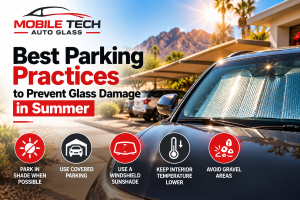
Sunshades reduce heat inside your car. Windshield covers specifically designed for autos reduce heat on your windshield. These are not perfect. They do not eliminate all heat. But they reduce it. Reduce stress on your glass. Using these tools during long summer parking sessions helps protect your glass.
Crack your windows slightly for air circulation
A car with completely closed windows heats up faster. Creates more internal pressure. More stress on glass. Cracking windows slightly allows air circulation. Reduces pressure buildup. Reduces internal heat slightly. This is a minor benefit but helps a little bit.
Check your weather stripping and seals
Summer heat makes existing seal problems worse. Seals that are slightly compromised let more heat in. More stress results. Making sure your seals are intact protects against excess heat. Protects your glass. Check your weatherstripping before summer. Replace it if it is damaged. Good seals keep heat out. Keep stress down.
Plan ahead during heat waves
During extreme heat waves, your glass is under maximum stress. Heat records. Extreme temperatures. Dangerous conditions for glass. During heat waves, park in garages. Park in shade. Avoid unnecessary driving. Minimize heat exposure. Heat waves are when most glass damage happens. Prepare. Protect. Plan ahead.
Your glass is tougher than you think but still needs protection
Auto glass is designed to handle normal summer conditions. Normal heat. Normal sun exposure. Normal stress. But extreme heat. Extreme temperature swings. Extreme sun exposure. These conditions stress glass beyond what it is designed for. Summer pushes your glass toward those extreme conditions. Protecting your glass during summer makes sense.
Mobile Tech Auto Glass helps customers protect their glass through smart summer parking practices. Schedule your glass inspection before summer heat arrives and make sure your glass is protected and ready for whatever summer brings.
FAQs
Will my glass really crack from summer heat?
Yes. Extreme heat combined with rapid cooling creates stress that cracks glass. Existing small damage spreads faster in summer heat. Temperature swings cause expansion and contraction stress. Summer is actually when most glass damage occurs because of heat stress combined with other factors.
How much hotter does a car get with dark tint versus light interior?
Dark interiors absorb more heat and get significantly hotter than light colored interiors. A car with a black interior can be 10 to 15 degrees hotter than the same car with a light gray interior in the same parking conditions. This temperature difference creates more stress on glass in dark cars.
Does parking in shade really make that much difference?
Yes. Shaded parking keeps your car 20 to 30 degrees cooler than direct sun parking. This temperature reduction significantly reduces stress on your glass. Reduces UV exposure. Extends coating life. Shade parking is one of the most effective protective measures you can take.
Can I park in a parking garage all summer?
If you can, yes. Parking garages provide temperature control. Shade. Protection from weather. Complete protection for your glass. Garages are ideal but not always convenient or available. Do the best shade parking you can manage.
What should I do if my windshield has existing damage before summer?
Get it repaired or replaced before summer heat arrives. Small damage spreads faster in summer heat. Address it now before summer stress makes it worse. Spending money on repair now saves you money and stress later.