Quick Summary: What This Blog Covers
This blog explains how anti glare windshield coatings work and why using the wrong cleaners like ammonia or alcohol based products can damage them over time. It highlights safe cleaning methods such as microfiber cloth with water, coating safe glass cleaners, and proper maintenance habits to keep the windshield clear and glare free for longer.
Introduction
You’re driving into the sunset and suddenly your windshield turns into a mirror. Everything reflects back at you. The sun. The headlights from cars behind you. Everything. You basically cannot see the road anymore.
This happens to tons of people and most of them think their windshield is just getting old or dirty. They grab whatever glass cleaner is under their sink and start spraying. Except the problem is not dirt. The problem is how they’re cleaning their anti-glare windshield.
Anti-glare windshields are actually pretty common on newer vehicles now. They have special coatings that reduce glare and reflections. But these coatings are sensitive. Use the wrong cleaner and you damage the coating. Use the right cleaner and your windshield stays protected and performs the way it was designed to.
The issue is that most people have no idea their windshield even has special coatings. They treat it like regular glass. They use whatever glass cleaner is cheapest. Then they wonder why their windshield starts looking cloudy or the anti-glare coating starts peeling off.
Mobile Tech Auto Glass works with anti-glare windshields constantly. The team sees the damage that wrong cleaners cause. And the team also sees how customers’ windshields stay perfect when they use the right products. This guide walks you through exactly which cleaners work best on anti-glare windshields and which ones you should completely avoid.
Understanding anti-glare windshield coatings
Before jumping into which cleaners to use, you need to understand what you’re actually cleaning. Anti-glare windshields are not just regular glass with a sticker on them. The coating is part of the glass itself or bonded permanently to the glass surface.
Manufacturers apply these coatings during the manufacturing process. Some coatings reduce glare by reducing light reflections. Other coatings cut down on UV exposure. Some do both at the same time. The specific coating depends on your vehicle manufacturer and year.
How coatings get damaged
The coating bonds chemically to the glass surface. But that bond is not indestructible. Harsh chemicals eat away at the coating. Abrasive cleaners scratch the coating. High heat can damage the coating. Pressure washing can damage the coating.
What does not damage the coating is gentle cleaning with the right products. That is the whole point of this guide. You can keep your anti-glare windshield perfect for years if you use the right approach.
When the coating gets damaged, it peels. It clouds over. It stops protecting you from glare. Your windshield that used to reduce reflections now reflects everything. You’re back to having glare problems but now you have an extra problem of damaged coating on top of it.
Mobile Tech Auto Glass sees damaged coatings regularly and it always comes from using harsh cleaners or abrasive cleaning methods. The good news is it is completely preventable.
Why regular glass cleaners destroy anti-glare coatings
That bottle of blue glass cleaner under your sink? The one that costs two dollars? Yeah that stuff is basically poison to anti-glare coatings. I’m not exaggerating. That generic glass cleaner contains ammonia and other harsh chemicals designed to dissolve stubborn grime.
Ammonia is extremely effective at cutting through grease and grime. That is why it is in so many window cleaners. But ammonia also dissolves the chemical bonds holding anti-glare coatings to your glass. Use ammonia based cleaner on an anti-glare windshield and you’re actively stripping the coating away one cleaning at a time.
The damage does not happen all at once. You clean your windshield once with ammonia cleaner and it seems fine. You clean it again a week later and it still seems fine. But with each cleaning, the coating gets a little bit thinner. After months of weekly cleaning with ammonia cleaners, your coating is basically gone.
Why alcohol based cleaners are risky too
Some people think alcohol based window cleaners are safer because they do not have ammonia. Actually alcohol is also harsh on anti-glare coatings. Alcohol dries out the coatings and makes them brittle. Brittle coatings peel and crack instead of staying smooth and protective.
The issue is that most commercial glass cleaners contain either ammonia or alcohol or both. The cheap ones have ammonia. The fancier ones have isopropyl alcohol. Neither one is safe for anti-glare coatings.
According to technical data from 3M, which manufactures protective coatings for automotive glass, standard window cleaners containing ammonia or alcohol reduce anti-glare coating effectiveness by measurable amounts with each application, with coating failure beginning within 3 to 6 months of regular use with inappropriate cleaners.
Water and microfiber are your best friends
The absolute safest way to clean anti-glare windshields is using nothing but water and microfiber cloth. Seriously. Just water. That is it.
Microfiber cloth is magical. It cleans glass better than newspaper or paper towels or cotton rags. The fibers grab dirt particles without scratching the glass or the coating. Water loosens the dirt. The microfiber grabs it and pulls it away.
This approach works for light dirt and dust. Most of the time when your windshield looks dirty, it is just surface dust. Water and microfiber handles that perfectly without any risk to your coating.
How to use water and microfiber correctly
Use distilled water if you can. Tap water sometimes has minerals that leave spots as it dries. Distilled water dries cleaner. But regular tap water works fine in a pinch.
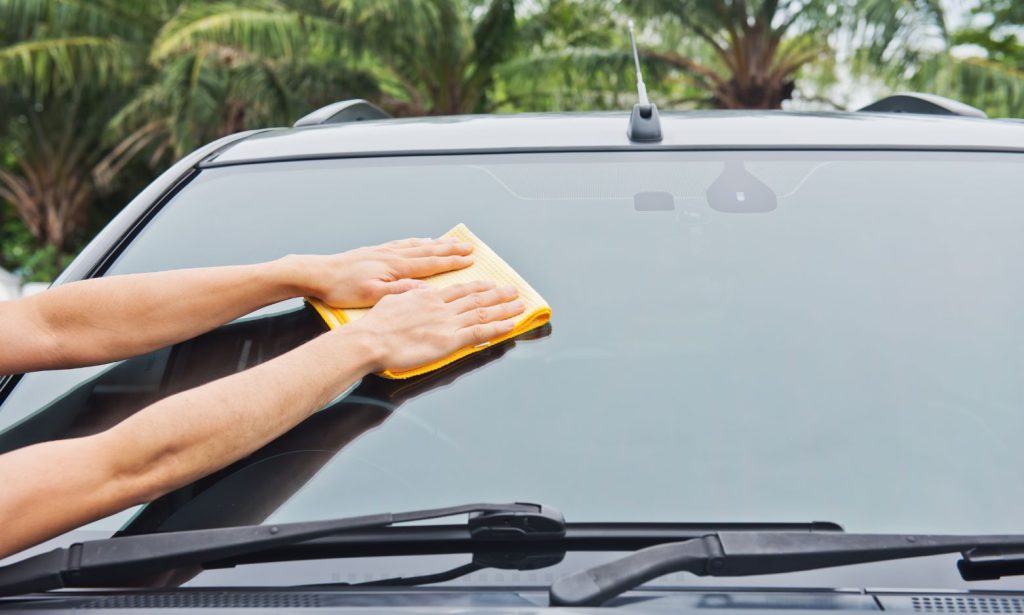
Dampen your microfiber cloth with water. Wring it out so it is damp but not dripping. Gently wipe your windshield in circular motions. Do not scrub hard. Let the microfiber do the work. Finish by using a dry microfiber cloth to dry the glass completely and prevent water spots.
This method is free. Water costs basically nothing. Microfiber cloths cost a few dollars. You are protecting your coating and saving money at the same time.
Mobile Tech Auto Glass recommends water and microfiber as the first line of defense for keeping anti-glare windshields clean.
When you need something stronger than water
Sometimes your windshield gets really dirty. Bug splatter. Bird droppings. Tree sap. Stuff that water alone cannot remove. That is when you need a specialized cleaner that is safe for anti-glare coatings.
Some automotive glass companies make cleaners specifically designed for anti-glare windshields. Invisible Glass makes products that work safely on coated glass. Stoner Inc makes windshield cleaners formulated for modern coatings.
These specialized cleaners do not contain ammonia or harsh alcohols. They contain ingredients that dissolve dried bug guts and tree sap without harming protective coatings. They cost more than generic blue cleaner but they actually work on tough grime while keeping your coating safe.
Reading labels matters
Look at the label. If it says ammonia free, that is good. If it says safe for all coatings or safe for treated glass, that is good. If the label does not mention anything about coatings or treatments, do not use it on your anti-glare windshield.
Some cleaners specifically say they are safe for ceramic coatings or hydrophobic coatings. Those are fine for anti-glare windshields too. If a cleaner is safe for expensive ceramic coatings, it is definitely safe for anti-glare windshield coatings.
Newspaper and vinegar is not the answer
You might hear people recommend using vinegar and newspaper to clean windshields. That trick works fine for regular home windows. But do not use it on anti-glare windshields.
Vinegar is acidic. Acid attacks protective coatings just like ammonia does. You’re trading one harsh chemical for another. The newspaper scrubbing is also riskier on delicate coatings.
Skip the vinegar trick completely when you have an anti-glare windshield.
Pressure washers are too aggressive
Never use a pressure washer on your windshield. The water pressure is too intense. It can damage anti-glare coatings. It can actually force water into gaps around your windshield frame and cause leaks.
A gentle hose at normal pressure is fine. A pressure washer is way too much and creates unnecessary risk.
The spray and wipe method works great
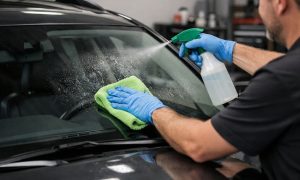
A lot of people use a spray bottle with water and a little bit of windshield soap designed for anti-glare glass. Spray the windshield. Let it sit for 30 seconds so the soap breaks down the grime. Then wipe with a microfiber cloth.
This method is gentle on coatings while being effective on moderate dirt. It is somewhere between just water and using industrial strength cleaner.
Data from the Auto Glass Safety Council shows that windshields cleaned with coating-safe products maintain anti-glare effectiveness for the full warranty period, while windshields cleaned with standard window cleaners lose measurable coating effectiveness within 12 months.
What about hydrophobic treatments
Some people add hydrophobic coatings to their windshields to make water bead up and run off. These treatments work but they require specific cleaning methods to maintain.
If your windshield has a hydrophobic coating, use only cleaners approved for hydrophobic glass. Do not use standard glass cleaners. Do not use vinegar. These products damage hydrophobic treatments.
Some hydrophobic products recommend specific companion cleaners. Check the product instructions and follow them exactly. The manufacturer knows what works with their treatment.
Maintaining your coating long term
The best way to keep your anti-glare coating working is preventing heavy buildup from happening in the first place. Clean your windshield regularly with water and microfiber. When dirt builds up, you need stronger cleaners. When you stay on top of it, simple water works fine.
Regular gentle cleaning beats aggressive occasional cleaning every single time. Your coating lasts longer. Your windshield stays clearer. You see better. Everyone wins.
Mobile Tech Auto Glass recommends cleaning your anti-glare windshield at least twice a month with water and microfiber for best results.
If your coating is already damaged
If your anti-glare coating is already peeling or damaged from using the wrong cleaners, the only real fix is windshield replacement. Once the coating comes off, it is gone. You cannot reapply it yourself.
The good news is windshield replacement is completely doable. Mobile Tech Auto Glass replaces windshields with proper anti-glare coatings so you get the same protection your original windshield had.
Making the switch to coating safe cleaners
If you have been using regular glass cleaners on your anti-glare windshield, it is time to switch. Throw away the ammonia based cleaners. Grab some microfiber cloths and distilled water. Get a bottle of coating safe glass cleaner for when you need something stronger.
Your windshield will thank you. Your coating will last longer. Your glare protection stays effective. You see better while driving. All of this comes from using the right products.
Mobile Tech Auto Glass can recommend specific cleaners that work best with your exact windshield. Call the team and ask which cleaners they recommend for your vehicle year and model. They know which coatings you have and what products work safely with them.
Your anti-glare windshield is designed to protect you from glare and reflections. Keep it working the right way by using coating safe cleaners. Schedule a consultation and get specific product recommendations for your vehicle so you maintain your windshield protection for years to come.
Common questions about anti-glare windshield cleaners
Can I use Windex on my anti-glare windshield?
No. Windex contains ammonia which damages anti-glare coatings. Stick with water and microfiber cloth or use cleaners specifically designed for coated windshields. Mobile Tech Auto Glass can recommend coating safe alternatives that work better than Windex anyway.
Is vinegar safe for anti-glare windshields?
No. Vinegar is acidic and attacks protective coatings just like ammonia does. Avoid vinegar based cleaners completely. Use water, coating safe cleaners, or a mixture of water with a tiny drop of dish soap instead.
How often should I clean my anti-glare windshield?
Clean it regularly with water and microfiber to prevent heavy buildup. Most people clean windshields every two weeks or monthly. Regular gentle cleaning is way better for your coating than aggressive occasional cleaning. The more often you clean gently, the longer your coating lasts.
What if I already damaged my coating with harsh cleaners?
If your coating is peeling or cloudy from harsh cleaners, windshield replacement is the only real fix. The coating cannot be repaired once it is damaged. But the good news is replacement windshields come with new coatings and proper care keeps them perfect.
Do all new windshields have anti-glare coatings?
Not all do. Many vehicles from 2015 onward have anti-glare windshields but some do not. Check your vehicle documentation or call Mobile Tech Auto Glass to find out if your windshield has protective coatings. They can tell you for sure and recommend the right cleaning products.