Quick Summary: What This Blog Covers
This blog explains why skipping ADAS calibration after windshield replacement can quietly compromise vehicle safety systems. It highlights how modern windshields support cameras and sensors, and why proper calibration is essential to keep features like lane assist and automatic braking accurate and reliable.
Introduction
Most people think a windshield replacement ends the moment the new glass goes in. The car looks clean again, the crack is gone, and everything feels normal. So they drive off without thinking twice. But modern vehicles don’t really work that simply anymore. A windshield today is not just glass. It often holds cameras, sensors, and systems that help the car “see” the road. That is exactly why skipping calibration after glass service can quietly create serious safety risks without any obvious warning at first.
At Mobile Tech Auto Glass, this is something we explain almost daily. Many drivers feel surprised when they hear that their vehicle needs extra work after a windshield replacement. But once they understand how advanced driver assistance systems actually function, the reason becomes very clear. The truth is simple. If the system cannot see correctly, it cannot protect correctly. That is the heart of ADAS calibration importance.
Modern windshields are part of the safety system
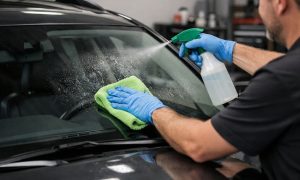
A long time ago, a windshield was just a sheet of glass. If it cracked, you replaced it and moved on. Today, things have changed completely. Many windshields now hold forward facing cameras that control lane assist, automatic braking, adaptive cruise control, and collision warnings. These systems rely on exact alignment. Even a tiny shift in angle can change what the camera reads on the road.
This means the windshield is no longer just a barrier against wind and dust. It is a mounting point for safety technology that constantly analyzes traffic, distance, and movement. When a technician removes and replaces the glass, even with perfect care, that alignment can shift slightly. That small shift is enough to affect how the system interprets the world around the car. This is where calibration becomes essential, not optional.
What actually happens during ADAS calibration
Calibration is not a random adjustment. It is a controlled process where the vehicle’s sensors and cameras are reset to factory specifications. Think of it like teaching the car where “straight” actually is again. After windshield replacement or any glass service that affects sensors, the system needs to relearn its position and angles.
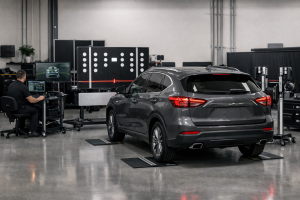
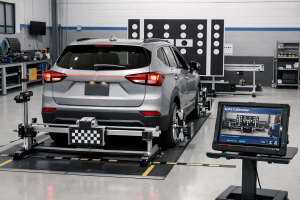
Technicians use specialized tools, targets, and software that communicate directly with the vehicle’s onboard systems. The goal is simple. Make sure what the camera sees matches what the manufacturer intended. Without this step, the system may still function, but not accurately. And accuracy is everything when it comes to safety features that react in seconds.
Why skipping calibration feels harmless at first
One of the biggest challenges with calibration is that problems do not always show up immediately. A car will still start. It will still drive. Nothing obvious feels wrong. That creates a false sense of security. Many drivers assume everything is fine because the car behaves normally in everyday conditions.
But ADAS systems are not designed for “normal driving only.” They are designed for emergency situations. Lane departure warnings, automatic braking, and collision alerts do not activate every minute. They activate when something goes wrong. If those systems are misaligned, they may respond too late or not at all. That is where the real risk begins.
This delayed impact is why the importance of ADAS calibration is often underestimated. The danger is not immediate. It builds quietly until the moment you actually need the system to react.
Small misalignment can create big problems
Even a few millimeters of camera shift can change how a vehicle interprets distance and speed. That might sound small, but for a system traveling at highway speeds, it becomes a serious issue. The car may think a vehicle is farther away than it actually is, or it may not recognize lane markings correctly.
This can lead to:
- Lane assist drifting incorrectly
- Late or unnecessary braking
- Cruise control misjudging distance
- Collision alerts triggering too late or too early
These systems are built to protect drivers, not confuse them. But when calibration is skipped, they operate on incorrect data. That is the real danger.
Why windshield replacement always affects calibration
Many drivers ask a simple question. Why does changing glass affect electronics at all? The answer is placement. The front camera is often mounted directly onto or behind the windshield. When the glass is removed, that camera loses its exact positioning reference. Even if the technician installs the new glass perfectly, the camera still needs recalibration because the angle changes slightly during the process.
Temperature, adhesive thickness, and mounting pressure all play a role. Nothing is perfectly identical from one installation to another. That is why manufacturers require recalibration after glass service. It is not a suggestion. It is a safety requirement built into the vehicle design.
Static and dynamic calibration work together
Not all calibration happens the same way. Some vehicles require static calibration, where the car stays still in a controlled environment while technicians use targets and tools to reset the system. Others require dynamic calibration, where the vehicle must be driven on real roads so the system can adjust based on live conditions.
Some cars even require both methods. Static calibration sets the foundation, while dynamic calibration fine tunes real world accuracy. Both methods aim to restore proper vision and distance measurement for the vehicle. Without them, the system operates on guesswork instead of precision.
The real risk shows up during emergencies
The most important part of ADAS calibration importance becomes clear in emergency situations. You may never notice a problem during normal driving. But ADAS systems are not tested in calm conditions. They are tested when something unexpected happens.
Imagine a car ahead suddenly braking. Your vehicle’s automatic braking system should react instantly. If calibration is off, that reaction might come too late. Or imagine a lane departure warning system failing to detect drifting on a highway curve. These are not everyday events, but they are exactly the moments where safety systems matter most.
This is why skipping calibration is not a small shortcut. It removes a layer of protection you are supposed to rely on in critical moments.
Weather and road conditions make accuracy even more important
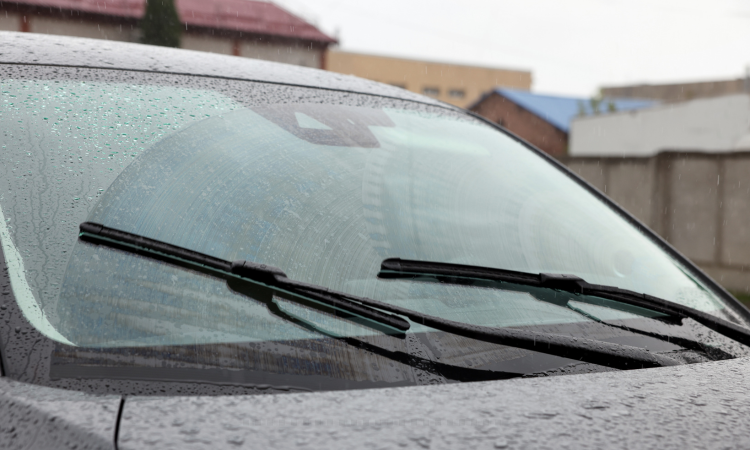
Driving conditions are not always perfect. Rain, fog, glare, and uneven roads all affect how sensors read the environment. A properly calibrated system already works within tight limits to handle these challenges. But a misaligned system struggles even more.
For example, rain can distort lane markings. A correctly calibrated camera adjusts for that uncertainty. A misaligned camera might lose track completely. The same applies to bright sunlight or night driving. The system must interpret signals accurately under pressure. Without calibration, those interpretations become unreliable.
Why modern vehicles depend heavily on calibration
Cars today are not just mechanical machines. They are software driven systems with sensors acting like human senses. Cameras act like eyes. Radar acts like depth perception. Software acts like the brain. If one part is off, the entire system becomes less reliable.
This dependency makes calibration a core part of vehicle safety, not an optional service. Manufacturers design vehicles assuming calibration will always be performed after glass service. Skipping it breaks that assumption.
At Mobile Tech Auto Glass, we often explain this to customers in simple terms. If the car “learns” through sensors, then those sensors must be reset when anything changes. Otherwise, the learning is based on wrong information.
Why some drivers skip it anyway
Even with all the risks, some drivers still skip calibration. The main reasons are usually:
- Lack of awareness
- Desire to save time
- Belief that nothing feels wrong
- Misunderstanding of ADAS systems
The problem is that none of these reasons affect how the system actually works. The system does not rely on feeling. It relies on precise measurement. And precision does not forgive shortcuts.
The long term cost of skipping calibration
Skipping calibration may seem like a small saving at first. But the long term cost can be much higher. If a safety system fails to prevent an accident or reacts incorrectly, the consequences can be serious. Even minor misalignment can lead to tire wear issues, braking inefficiency, or repeated sensor warnings that eventually require additional diagnostics and repairs.
In many cases, correcting a calibration later still costs more than doing it correctly right after glass service. It also reduces long term trust in the vehicle’s safety systems.
Final thoughts
Windshield replacement today is not just about replacing glass. It is about restoring a full safety system that depends on precision. ADAS technology works silently in the background, but it only works properly when calibrated correctly. Skipping this step removes accuracy from systems designed to protect you in real driving situations.
The ADAS calibration importance becomes clear when you understand one simple idea. Your car does not guess. It calculates. And if the starting point is wrong, every calculation after that becomes unreliable.
At Mobile Tech Auto Glass, we treat calibration as a required part of every ADAS equipped glass service because safety systems deserve accuracy, not assumptions. If your vehicle recently had windshield work or sensor related service, proper calibration ensures everything works exactly as it should when it matters most.
FAQs
1. Why is ADAS calibration needed after windshield replacement
Because the camera and sensors shift slightly when the glass is removed and reinstalled.
2. What happens if I skip ADAS calibration
Your safety systems may still work, but they can give incorrect readings or respond late.
3. How long does ADAS calibration take
It depends on the vehicle, but most calibrations take between one and two hours.
4. Is ADAS calibration always required after glass service
Yes, for most modern vehicles with cameras or sensors mounted on the windshield.
5. Can I drive without calibration
You can drive, but you reduce the accuracy of safety systems that protect you in emergencies.