Quick Blog Summary
This blog explains how ceramic coatings can improve windshield clarity by helping water, dust, and grime slide off the glass more easily. You’ll learn what ceramic coatings can and cannot do, how they improve visibility during rain and night driving, and why they cannot repair chips, cracks, or deep pitting. It also covers proper application, maintenance, replacement considerations, and whether a coating is worth it for drivers in dusty areas like Phoenix.
Introduction
You wash your car on a Saturday morning and the water beads up and runs right off the glass. It looks absolutely fantastic. A week later it starts to rain and the view is perfectly clear again with the wipers doing virtually nothing. That’s when you start to wonder if the shine that the detailer put on is in fact the reason.
We get that question all the time at Mobile Tech Auto Glass. People will ask us “Will a ceramic coating make my windscreen clearer, safer or just in general easier to live with?” Some of them have had a coating applied and are just looking to see if it’s actually making a difference. Others are in the process of considering it and are looking for the straight answer before they fork out the cash. This post is all about what ceramic coatings do to glass, what they don’t do and how they fit into the overall care regime that your windscreen requires.
Right, let’s start with the basics.
What a ceramic coating actually is
A ceramic coating is a very thin liquid which bonds to the surface of the glass or paint. Once it has cured it forms a hard, slick film. Most of the products are silica based compounds (that’s where the word ‘ceramic’ comes from). The concept is fairly straightforward really. The coating goes on top of the glass and fills in the tiny surface flaws.
On the windscreen the surface layer does change the way water and grime behaves. The glass is still glass. There’s just a second layer on the outside.
Some people confuse ceramic coatings with other products. A rain repellent, a glass sealant and a ceramic coating all work on the surface but they don’t last in the same way. A rain repellent will generally wear off in a matter of weeks or months. Glass sealants will often last longer. Ceramic coatings are generally the most durable of the three (though of course the level of durability will vary depending on the product and how the coating is applied).
As per the Automotive Glass Research Council, glass treatments can affect the way water and debris behave on the glass, but they don’t in any way alter the strength or structure of the glass.
The clarity question
Clarity is all about how clear the view is through the glass. A clear windscreen will give you a pristine view of the road, free from any distortion, glare or film. So does a coating help with that?
In some ways yes. A slick surface will have the water and dirt just slide off rather than sit in streaks. That translates to less film, fewer water spots and a view that stays cleaner longer between washes. Many people will notice the difference the first time it rains. The glass looks sharper and the wipers don’t smear as much.
In other respects the answer is less obvious. A coating won’t fix a chip, a crack or pitting. If the glass is already damaged then the coating will just be sitting on top of that damage. It may give a smoother feel to the surface but it won’t make the glass any more transparent underneath.
The honest answer is this: a good coating will help the glass look cleaner and stay cleaner. It will help with rain visibility at speed. It won’t fix the damage and it won’t turn a bad windscreen into a good one.
What a coating can and cannot do
Here’s a quick way to put it. Coatings are great at dealing with surface issues. They were not designed to fix structural or fundamental problems.
| Concern |
Can a ceramic coating help? |
Why |
| Water spots and streaks |
Yes |
The slick surface reduces water sitting on the glass |
| Rain visibility at speed |
Often |
Water sheets off more easily, so the view stays clearer |
| Light dirt and road film |
Yes |
Grime is easier to wipe away |
| Bug residue |
Yes |
Bugs release more easily from the surface |
| Small surface scratches |
Limited |
The coating can hide very light marks but not fix them |
| Chips and cracks |
No |
Damage sits in the glass structure |
| Pitting from sand |
Limited |
The coating may reduce buildup but won’t reverse existing pits |
| Glare from damaged glass |
Limited |
Damage still scatters light underneath the coating |
That table is why we’re so cautious when a customer asks. A coating is a helper, it’s not a repair.
Why the glass already matters before any coating goes on
Before we even talk about any product we check the glass. The coatings bond to a clean, smooth surface. If there’s a chip in the vicinity, a crack running through the view, or heavy pitting then the coating won’t bond in the same way. Some products may not bond well over those areas and the result can be a very uneven appearance.
A coating won’t stop a crack developing in the long term. It’ll still grow with the thermal stresses and the road stresses. The coating just makes it harder to see the crack at a glance.
This is why we tell the customer to deal with the chips first. Fix the damage, then talk about protection. That’s the order that gives you the best value for your money.
How ceramic coatings can help with rain and night driving
Rain is where the difference is most obvious. Water on untreated glass will form a thin film which smears the light and blurs the road. On a coated windscreen the water beads and rolls. That helps at highway speeds when the wind and motion of the vehicle clear the glass.
At night a clean surface will reduce the glare from oncoming headlights. Dirt, film and water spots scatter light and that scattering is what causes the halos and starbursts in the first place. A coated windscreen that stays clean may go some way to reducing that glare. The effect isn’t going to be massive on a clean, healthy windscreen but it can make a difference on one that tends to get grimy very quickly.
Still, a coating doesn’t alter the brightness of the sun or the wetness of the road. Wipers still matter. Good washer fluid still matters. Clean glass still matters most of all.
The National Highway Traffic Safety Administration emphasizes that clear visibility through the windshield is a core part of safe driving, so keeping the glass clean and undistorted is worth the effort.
The desert factor
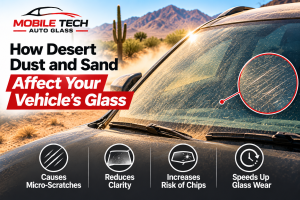
Arizona drivers have a few issues that make coatings a very interesting proposition. Dust, sand and the sun all put the glass to the test. Fine dust can settle on the windscreen and just hang there in a film. Blowing sand can scratch the glass over time. Heat can actually bake the grime onto the glass.
A slick coating will help the dust to release during a wash and will also make it harder for dirt to stick to the surface. That’s useful after a storm when the glass is full of grit.
The coating won’t stop the sand pitting the glass in a bad storm. Pitting occurs when hard particles hit the glass at speed. A coating can provide a sacrificial layer that will take some of the wear, but it’s not a shield at all. That’s why we always tell our customers to think of the coating as just one element of a broader care regime.
The Government Fleet report on Phoenix dust storms notes that blowing sand is abrasive and can reduce windshield clarity and headlight output over time, which is why surface care matters in dusty regions.
What the application process looks like
Ceramic coating on glass isn’t something you can just ‘spray on’ in your driveway and then walk away from. The best results are achieved through a very careful preparation process. The glass has to be cleaned right down to the last bit of oil, wax and residue. The surface then has to be dry and free of dust before the coating is applied.
The majority of the products are applied using a foam applicator in very thin, even coats. They require time to flash and cure. The curing conditions are important. Temperature, humidity and direct sun all have an effect on how the coating sets. If you rush this stage you’ll end up with streaks and all sorts of unevenness.
Once cured the coating may require a short period of waiting before the glass gets wet. Some products will require a day or so before it’s safe to have rain or a wash. Always follow the product instructions. A hurried wash can completely ruin the finish.
The prep steps that matter most
Prep is where the majority of coating problems originate. Here’s what a proper process looks like.
First have a good look at the glass for chips, cracks and heavy pitting. Sort out anything that needs repairing.
Secondly, clean the glass with an appropriate automotive glass cleaner. Household cleaners containing ammonia can leave a residue which will actually stop the bond forming.
Thirdly decontaminate the surface. A clay bar or a dedicated glass decontamination product will remove the grit that’s bonded to the surface and which regular washing will simply not remove.
Fourthly, dry the glass right through and work in a clean, shaded area if you can.
Fifth, apply the coating evenly and wipe off any excess before it hardens.
Skipping any of these steps will invariably lead to a poorer result. A coating applied to a dirty surface will tend to peel early and/or appear hazy.
Common myths about coatings
Coatings are full of myths. A number of them are repeated over and over again.
One myth is that the coating makes the windscreen bulletproof. It doesn’t. A coating can take some abuse, it won’t stop a rock or a crack.
Another myth is that a coating will eliminate the need for wipers. It won’t. Wipers are still absolutely necessary, particularly in heavy rain. A coating may help with the water running off, but it won’t remove the need for wipers.
A third myth is that a coating will repair a chip. It won’t. A chip requires resin repair or replacement and a coating will not in any way alter that.
The final myth is that a coating will last forever. It won’t. They all degrade over time, particularly with frequent washing, exposure to harsh chemicals and the sun. Maintenance is key.
How to keep a coating working
Good maintenance is what keeps the benefits around. Wash the glass with a gentle automotive product and a soft microfibre cloth. No harsh chemicals, no abrasive pads, no dry wiping. Just rinse the glass with water after a dust storm before you go to wipe it.
Keep your wiper blades fresh. Worn blades will smear water and grime across the glass and can actually scratch the coating over time. A fresh pair of blades will help the coating do its job.
Look out for the coating starting to wear through. Water may cease to bead. The glass may appear dull in certain lights. A simple wash and a fresh layer (if the product permits) will restore the shine.
Park in the shade if you can. Heat accelerates the wear of many coatings and UV light will slowly degrade them.
Coatings and windshield replacement
If your windscreen is being replaced the new glass is normally going to be without a coating. You can apply a coating after the install but timing is important. The new urethane has to cure properly before you start applying the coating. Just don’t get any of the coating product on the seal or the edges as that can affect the bond.
Ask your technician how long to wait before you coat the new windscreen. Most of the shops will give you a clear timescale depending on the adhesive they’re using.
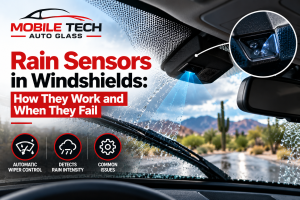
If your car has a forward camera or a rain sensor be very careful with any coating products in the sensor zone. Some of the coatings can actually affect the sensor’s reading of the glass. Always ask the installer before you go ahead and coat that area, particularly if the car is going to need calibration after the replacement.
What to ask before you buy a coating
Not every coating is right for every windscreen. Before you buy, ask yourself a few questions.
Ask whether it’s a product for glass or a product for paint. The glass products are designed for the characteristics of glass, i.e. the windscreen. The paint products may not perform in the same way.
Ask how long the coating is expected to last and what the care requirements are. A product that has a longer life may well cost more initially but could end up being the better value.
Ask whether the coating has any effect on the sensors or cameras. A lot of modern vehicles have all sorts of systems behind the glass that need a clear view.
Ask whether they check the glass for damage first. A shop that will check the glass prior to coating is generally a shop that cares about the end result.
Insurance and coatings
Coatings are generally not insured. They’re an optional extra rather than a repair. Glass damage (chips, cracks, some pitting) may be covered under a comprehensive policy, depending on the specifics of your policy.
The
Insurance Information Institute explain how comprehensive coverage deals with glass damage, which is useful background if you’re trying to decide whether to repair the damage prior to applying the protective film.
The Insurance Information Institute notes that comprehensive coverage often handles glass damage from storms and debris, so checking your policy before you invest in cosmetic protection can help you prioritize repairs first.
Are coatings worth it for you?
That’s down to your own driving really. If you’re driving a lot in the rain, in the dust, in heavy traffic etc then a coating may be worthwhile. If you’re just parking in a garage and very rarely see any bad weather then you may not even notice the difference.
Think about what bothers you most. If it’s streaks and water spots then a coating can be of some benefit. If it’s mainly cracks and chips then you’d be better off spending your money on repairs first. If you’re the type of person who has to clean up after dust storms then a coating will help you clean up after a bad day.
A good approach is to sort out any damage, keep the glass clean and then consider whether a coating is something you actually need. That’s the order you want to work in if you want to get the best value.
Wrapping up
Ceramic coatings can help with windscreen clarity (mainly by keeping it cleaner, reducing the amount of water streaking and helping the rain to run off more easily) and can make dust and grime a lot easier to wipe away. They do nothing to fix chips, cracks or deep pitting though and won’t in any way replace good wipers and clean glass.
The best results come from a clear plan really. Look at the glass, fix any damage, get the surface properly prepped, apply the coating correctly and then of course you’ve got to keep up with the maintenance. That’s when a coating can be a real useful bit of the business.
If you’re wondering whether your windscreen actually needs repair prior to applying a coating, or indeed you just want a straight answer as to what your glass can take, get in touch with
the Mobile Tech Auto Glass team. We’ll have a look at your windscreen, explain what we see in plain English and then help you to make up your own mind as to what the next step should be.
FAQs
Does a ceramic coating make my windscreen any clearer?
It can make the glass look cleaner and will often help the water to roll off more easily which in turn will improve visibility in the rain. It won’t fix any chips, cracks or pitting and it won’t improve the clarity of the glass itself if it’s damaged.
Can I apply a ceramic coating to a cracked windscreen?
It’s best to get the crack repaired or the glass replaced first. A coating won’t adhere well over a damaged area and won’t stop the crack from progressing. Get a technician to look at the glass prior to applying any coating.
How long will a windscreen coating last?
It varies from product to product, depending on how often you wash the car, how much sun and heat the glass is exposed to. Some will last several months, some will last much longer with careful attention. Check the product label and adhere to the care instructions.
Will a coating have any effect on my rain sensor or camera?
It can (if it gets into the sensor zone or changes the way the sensor reads the glass). Keep any coating products away from that area unless your installer confirms it’s safe. If your car requires calibration following a windscreen replacement then check the timing of the coating with your installer prior to applying it.
Is a coating worthwhile if you’re in a dusty area like Phoenix?
It can help with the clean up after a dust storm and make grime much easier to wipe away. It won’t stop the sand pitting the glass in the middle of a proper storm. The best results will be achieved by using a coating in conjunction with regular washing, fresh wiper blades and shade parking.
Also Read:
-
-
-
-
-