Your car has been acting weird since you got the windshield replaced. The lane keeping keeps triggering when you are driving straight. The automatic braking seems to activate for no reason. Your adaptive cruise control is not maintaining the distance correctly.
You mention this to someone and they tell you that you probably need ADAS aftermarket alignment. You nod like you understand what that means but honestly you have no idea what ADAS aftermarket alignment even is. You definitely do not know whether your car actually needs it or if someone is just trying to upsell you on services you don’t need.
Most people have no idea what ADAS alignment is or why it matters. The term sounds technical and complicated. It sounds expensive. It sounds like something you probably do not need.
The truth is way simpler than that. ADAS aftermarket alignment is just making sure your safety camera is pointed at the right angle so your safety features work correctly. That is it. And yeah, your car probably does need it if those safety features are acting weird after windshield work.
Mobile Tech Auto Glass deals with ADAS alignment all the time. The team knows exactly what signs tell you that alignment is needed and what happens when you skip it. This guide walks you through the warning signs that scream your car needs ADAS aftermarket alignment so you stop guessing and actually know whether to get it done.
Understanding what ADAS actually is
Before talking about alignment, you need to understand what ADAS systems actually do in your car.
ADAS stands for Advanced Driver Assistance Systems. Basically all the technology in your car designed to help prevent accidents. Your windshield has a camera mounted behind the rearview mirror. That camera is the brain of your ADAS system.
The camera watches the road constantly. It reads lane markings. It tracks vehicles ahead of you. It spots pedestrians. It recognizes speed limit signs. Based on everything the camera sees, your car automatically helps keep you safe.
Lane departure warning beeps when you drift out of your lane. Lane keeping actually steers you back. Forward collision warning screams when you are getting too close to the car ahead. Automatic emergency braking stops your car when a crash is about to happen. Adaptive cruise control maintains safe distance from the car in front automatically.
All of these features depend entirely on that camera seeing things correctly. When the camera is pointed at the wrong angle, nothing works right.
What ADAS aftermarket alignment actually means
ADAS aftermarket alignment is the process of pointing that camera back at the correct angle after it moved. The camera moved when your windshield came out and went back in.
Even a tiny movement throws off every single safety feature. The camera now sees lane markings from a different perspective. It calculates distances wrong. It reads signs at incorrect angles. Everything is off.
The camera itself is fine. The wiring is fine. The software is fine. The camera is just pointed wrong. ADAS aftermarket alignment fixes the angle using specialized equipment and procedures.
Why it is called aftermarket
Aftermarket means after you bought the car. The camera was aligned at the factory when the car was built. After you own it and get your windshield replaced, you might need realignment. That is called aftermarket alignment.
It sounds like a fancy term but it just means alignment that happens after the car left the factory.
Mobile Tech Auto Glass performs ADAS aftermarket alignment on almost every windshield replacement because the camera always moves when the glass changes.
The biggest warning sign: safety features acting weird
The most obvious sign that your car needs ADAS aftermarket alignment is when your safety features start behaving strangely after windshield work.
Lane departure warning triggers at wrong times
Your lane keeping system beeps constantly when you are driving straight and centered perfectly in your lane. That is weird. It should only beep when you drift.
Or the opposite happens. You drift toward the line and the system stays totally silent. The warning that should activate does not.
Either situation means your camera is not seeing lane markings correctly from its shifted angle. ADAS aftermarket alignment will fix it.
Automatic braking activates randomly
You are driving down a clear highway with zero traffic. Suddenly your automatic braking slams on for no reason. Nothing was in front of you. No hazard. Just random braking.
Or you approach a car at too high a speed and your automatic braking never activates. The car ahead slows down and you almost rear-end it because the safety feature failed.
Both situations mean the camera is misjudging distance. It thinks cars are closer than they are or farther than they are. Misalignment causes this. ADAS aftermarket alignment fixes it.
According to NHTSA, misaligned ADAS cameras cause automatic emergency braking to fail in approximately 35% of test scenarios, making misaligned systems nearly as unreliable as having no system at all.
Adaptive cruise control cannot maintain distance
Your adaptive cruise is supposed to keep a set distance from the car ahead. You set it to follow 3 car lengths back and it stays there. Except your car is actually riding the bumper of the car ahead now. Way too close.
Or the opposite. Your car stays so far back that everyone keeps cutting in front of you. The distance is way larger than you set it.
The camera cannot judge distance correctly when misaligned. ADAS aftermarket alignment fixes the measurement so the system calculates proper distance again.
Traffic sign recognition shows wrong information
Your dashboard displays speed limits read from signs you pass. Except the speed limit showing is wrong. You pass a 35 mph zone and your car displays 55. You pass a 65 mph highway and it shows 45.
The camera cannot read signs accurately from a shifted angle. Sign recognition fails because the camera perspective is wrong. Alignment fixes it.
The warning signs that are less obvious
Some warning signs are not as obvious as safety features going haywire. But they still mean your car needs alignment.
Your car feels slightly off when steering
Your car has always felt a certain way when you steer. After your windshield replacement it feels slightly different. Lane keeping assist engages at different moments. The steering feels weird even when you are in manual control.
This weird feeling might mean the camera angle shifted just enough to affect how your steering assist system interprets your lane position. Small misalignment creates this subtle off feeling.
Dashboard warning lights related to ADAS
Your dashboard lights up with a camera warning. Or a generic vehicle warning. Or a specific ADAS system warning. Your car is telling you something is wrong with your advanced safety systems.
These warnings mean the car’s computer detected that the ADAS camera is giving it weird data. Misalignment causes this. The computer knows something is off even if you have not noticed it yet.
Inconsistent system behavior
Your lane keeper works perfectly for five minutes then stops working for a bit then starts again. Your automatic braking works sometimes but not always. Your adaptive cruise is reliable most of the time but occasionally acts weird.
Inconsistent behavior suggests the camera angle is not quite right. Sometimes the angle works by coincidence. Sometimes it does not. The system is unreliable rather than completely broken.
When you probably do not need alignment
Not every windshield replacement requires ADAS aftermarket alignment. Some do. Some do not.
If your safety features work perfectly after your windshield replacement, your camera probably stayed in the correct position. Some windshield work disturbs the camera less than other work.
If your car is older and does not have ADAS features, you definitely do not need alignment. Only modern vehicles with camera based safety systems need this.
If you had a chip repair instead of full replacement, alignment probably was not necessary. Full replacements move the camera more than repairs do.
Ask your glass shop
Your glass shop should tell you whether alignment is needed for your specific vehicle and situation. If they are unsure, ask them to check. Mobile Tech Auto Glass evaluates whether each vehicle needs alignment before charging for it.
Do not just assume you need it or assume you do not. Get confirmation based on your specific car and work that was done.
Why you should not skip alignment
Some people skip ADAS aftermarket alignment to save money. They think if the safety features are working okay, alignment is not necessary.
Except okay is not the same as correct. A misaligned camera might work okay for a while then fail at the exact moment you need it. Your automatic braking might work for everyday driving but fail in an emergency.
When you need your safety systems most, they will not work correctly if they are operating from misaligned camera data.
Data from the Insurance Institute for Highway Safety shows that vehicles with misaligned ADAS cameras experience collision rates 18% higher than vehicles with properly aligned systems.
You spent money on these safety systems for a reason. They protect you and your passengers. Skipping alignment defeats their purpose.
The alignment process takes time but not much
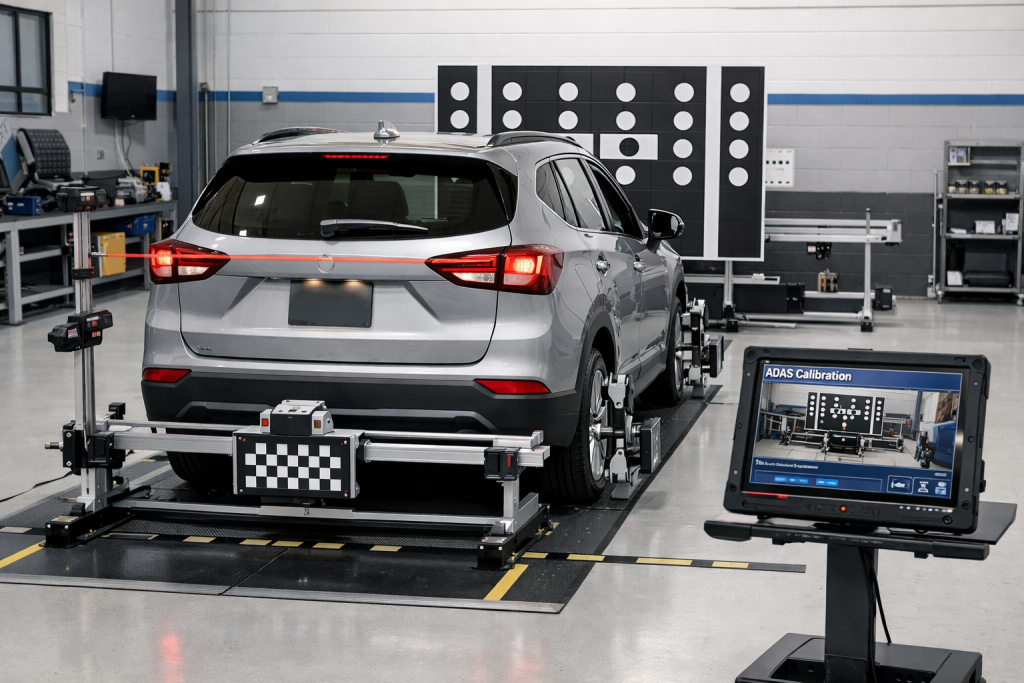
ADAS aftermarket alignment takes different amounts of time depending on your vehicle. Some cars need just static alignment in a controlled space. Some need dynamic alignment on the road. Some need both.
Static alignment usually takes one to two hours. The technician sets up calibration targets at precise distances. Your camera realigns to those targets. It is controlled and precise.
Dynamic alignment means driving your car at specific speeds on roads with clear lane markings. The system calibrates using real world references. This takes 30 to 45 minutes of driving.
Both types together might take three to four hours total. It is not a quick process but it is absolutely necessary for proper safety system function.
Mobile Tech Auto Glass performs both types of calibration for different vehicles because some cars require specific procedures.
Getting alignment right matters
Your car’s safety systems are only as good as their calibration. A misaligned system is worse than no system because you trust something that does not work right.
Getting ADAS aftermarket alignment right means your safety features actually work the way they were designed. You get the protection you paid for. Your car genuinely helps keep you safe.
Do not skip this step. Do not assume it is unnecessary. Get alignment checked after windshield work and get it done if needed.
Mobile Tech Auto Glass checks ADAS alignment as part of windshield service and performs alignment when needed. Schedule your windshield service with proper alignment included and drive away knowing your safety systems work correctly.
Common questions about ADAS aftermarket alignment
How much does ADAS aftermarket alignment cost?
ADAS alignment typically runs between 150 and 400 dollars depending on your vehicle and whether static, dynamic, or both calibration types are needed. Luxury vehicles sometimes cost more because their systems are more complex. Many insurance policies cover alignment as part of windshield replacement claims. Mobile Tech Auto Glass provides exact pricing based on your specific vehicle.
Do all cars need alignment after windshield replacement?
Not all do. Older cars without ADAS cameras do not need it. Some newer cars maintain proper camera alignment even after windshield work depending on how the work is done. Your technician can tell you whether your specific vehicle needs alignment. Do not assume yes or no without checking.
What if my safety features seemed to work fine after replacement?
Working fine right now does not mean properly aligned. The camera might still be slightly off. Safety features might work in normal conditions but fail in emergencies. Get alignment checked to confirm everything is correct rather than guessing.
Can I do ADAS alignment myself?
No. ADAS alignment requires manufacturer specific equipment, specialized procedures, and proper verification. DIY alignment is impossible for consumer vehicle owners. You need a professional shop with proper equipment like Mobile Tech Auto Glass.
How do I know if my shop actually aligned my ADAS properly?
A professional shop provides documentation showing the alignment was completed according to manufacturer specifications. You should get a calibration report or certificate. Good shops stand behind their work with warranties. If your shop cannot provide documentation or will not guarantee their alignment, that is a red flag.