Summary of the Blog
This blog discusses the main symptoms that your ADAS camera could be out of position. It describes the ways in which the camera can be thrown off by such changes as a windshield replacement or a small collision. It is important to have it recalibrated as soon as possible to ensure that the safety systems in your vehicle are operating properly.
Introduction
And smarter than ever before your car. The cars that are currently in the market are full of technology, which monitors the road, alerts you on the hazards and even brakes before you do. All that is relying upon a single, small but extremely important element: your ADAS camera. The camera is the eyes of all the Advanced Driver Assistance System, which is abbreviated as ADAS.
Here is the problem. That camera can fall out of alignment without you even knowing it. A windshield replacement, a minor fender bender, or even a rough patch of road can throw it off. And when it is off, the systems you trust to keep you safe start giving you wrong information. At Mobile Tech Auto Glass, the team sees this situation regularly, and the consequences can be serious.
This guide walks through the most common signs that your ADAS camera is misaligned, why it happens, and what you need to do about it before it puts you or anyone else at risk.
What does an ADAS camera actually do?
Before getting into the signs of ADAS camera misalignment, it helps to understand what the camera controls. Most ADAS cameras sit behind the rearview mirror, mounted to the windshield. From that position, the camera reads lane markings, detects vehicles ahead, spots pedestrians, reads speed limit signs, and monitors your following distance.
All of the features that depend on this camera include lane departure warning, automatic emergency braking, forward collision warning, adaptive cruise control, and traffic sign recognition. These are not just conveniences. Many of them are life-saving features. When your ADAS camera is misaligned even slightly, all of these systems work from bad data.
According to the National Highway Traffic Safety Administration, vehicles equipped with properly functioning automatic emergency braking systems reduce rear-end crashes by up to 50%. That benefit disappears when the camera feeding that system is out of alignment.
How does ADAS camera misalignment happen?
ADAS camera misalignment does not always come from something dramatic. People assume their camera only goes out of alignment after a serious accident. That is not true at all.
A windshield replacement is one of the most common causes. The camera mounts directly to the glass in most vehicles. When the old glass comes out and new glass goes in, the camera position shifts. Even a fraction of a degree off is enough to cause problems. Any shop that replaces a windshield without recalibrating the ADAS camera afterward leaves the driver with a compromised safety system.
Other common causes include a minor collision at low speed, hitting a large pothole or speed bump hard, a small impact to the front of the vehicle, temperature extremes that affect mounting brackets over time, and any repair work done near the camera mount area.
Mobile Tech Auto Glass always performs ADAS camera recalibration after windshield replacement because skipping that step is not an option when driver safety is at stake.
Sign number one: your lane departure warning feels off
Lane departure warning is one of the first features to behave strangely when ADAS camera misalignment is present. The system watches the painted lines on either side of your vehicle. When your car drifts toward a line without signaling, it warns you.
When the camera is misaligned, it reads the lane markings from a skewed angle. That means it either warns you when you are nowhere near the line, or it stays completely silent while you actually drift out of your lane. Both situations are dangerous. If you notice your lane departure warning going off at random moments or not activating when you clearly drift, ADAS camera misalignment is very likely the reason.
Sign number two: automatic emergency braking acts strangely
Automatic emergency braking uses the ADAS camera along with radar sensors to detect vehicles and obstacles ahead. When the system sees a collision coming, it brakes for you or supplements your own braking.
ADAS camera misalignment throws off the visual input to this system. You might notice the brakes engaging lightly when nothing is in front of you. Or the system might warn you about a phantom vehicle. In other cases, it might fail to react at all when a real hazard appears. Any unusual behavior from your automatic emergency braking system deserves immediate attention. Do not brush it off as a glitch.
A key tip from the team at Mobile Tech Auto Glass: if your automatic emergency braking light shows up on the dashboard with no clear reason, get your ADAS camera inspected before driving on a highway or in heavy traffic.
Sign number three: adaptive cruise control loses the car ahead
Adaptive cruise control is a feature many drivers rely on for long highway drives. It keeps a set distance between your car and the vehicle ahead automatically. The ADAS camera tracks the car in front and tells your vehicle to speed up or slow down accordingly.
When ADAS camera misalignment is present, adaptive cruise control loses track of the vehicle ahead. Your car might suddenly accelerate when it should be holding back. It might brake for no reason. It might simply disengage on its own. If your adaptive cruise control behaves inconsistently on a clear, straight road with good visibility, the camera is worth inspecting right away.
Sign number four: your traffic sign recognition is wrong
Many modern vehicles read speed limit signs and display them on the dashboard. This feature also depends entirely on the ADAS camera. When the camera is misaligned, it cannot read signs accurately.
You might see the wrong speed limit displayed. You might see no speed limit at all even when signs are present. In some cases the system picks up signs from the opposite side of the road and shows their values instead. This is a clear and easy-to-notice sign of ADAS camera misalignment that many drivers overlook because they assume the system is just unreliable.
Sign number five: a dashboard warning light appears
Modern vehicles run self-checks on their safety systems constantly. When the car detects that the ADAS camera is producing data that does not make sense, it triggers a warning light on the dashboard.
This might appear as a camera icon, a general vehicle warning light, or a specific ADAS system warning depending on your make and model. Some vehicles display a text message directly. If any of these lights appear after a windshield replacement or after any kind of impact, ADAS camera misalignment should be the first thing you investigate.
Check your owner’s manual or use a resource like CarMD to understand what specific warning lights mean for your vehicle.
Sign number six: forward collision warnings feel inconsistent
Forward collision warning tells you when you are getting too close to the vehicle ahead. It is different from automatic emergency braking because it warns you rather than taking action. You still brake yourself, but the system gives you that extra moment of reaction time.
When ADAS camera misalignment is present, this system gives inconsistent alerts. It warns you on open roads with plenty of space. It stays quiet in situations where you genuinely are too close. Inconsistency is the keyword here. A properly calibrated camera makes this system feel seamless and predictable. A misaligned one makes it feel random and unreliable.
According to the Insurance Institute for Highway Safety, forward collision warning systems reduce rear-end police-reported crashes by 27%. That reduction only happens when the camera supporting the system is properly aligned.
Sign number seven: the camera view on your screen looks tilted
Some vehicles display a live feed from the ADAS camera on the infotainment screen. If you can see this feed and it looks tilted, off-center, or pointed at the wrong angle, that is a direct visual confirmation of ADAS camera misalignment.
Even if the image looks only slightly off to you, that small visual difference translates to a significant error in how the system reads the road ahead. Trust what you see. A camera that looks crooked on screen is a camera that needs recalibration.
Why you should never ignore ADAS camera misalignment
Some people notice these warning signs and decide to wait. Maybe they think it will sort itself out. Maybe they assume it is just a software glitch. ADAS camera misalignment does not fix itself. It only gets worse over time as the system continues operating from incorrect data.
The features that depend on your ADAS camera are not luxury add-ons. They are safety systems. Driving with a misaligned camera means you are driving with a compromised safety net. The features are still technically active, but they are working from bad information. That is arguably more dangerous than having them switched off entirely, because you still trust them.
Getting the camera recalibrated is not a complicated or time-consuming process when handled by a qualified technician. Mobile Tech Auto Glass offers professional ADAS camera recalibration as part of its windshield replacement service and as a standalone appointment for any vehicle showing these warning signs.
What does ADAS camera recalibration involve?
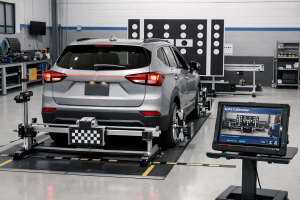
Recalibration is a precise process. Technicians use specialized equipment and follow manufacturer-specific procedures to realign the camera to factory settings. There are two types: static calibration and dynamic calibration.
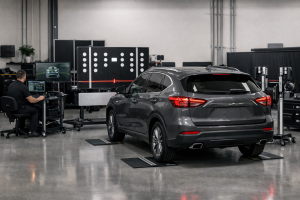
Static calibration happens in a controlled indoor environment. The technician places calibration targets at exact distances and angles in front of the vehicle. The camera realigns itself using those targets as reference points.
Dynamic calibration happens on the road. A technician drives the vehicle at specific speeds on roads with clear lane markings while connected equipment guides the camera back into proper alignment.
Some vehicles require one type and some require both. A qualified shop like Mobile Tech Auto Glass knows exactly which procedure your specific make and model requires, following guidelines from sources like the Auto Glass Safety Council and vehicle manufacturer documentation.
Final thoughts
Your ADAS camera is a small component with a massive job. It feeds data to nearly every modern safety system in your vehicle. When ADAS camera misalignment happens, those systems stop working the way they should. Lane departure warnings misfire. Emergency braking becomes unreliable. Adaptive cruise control loses accuracy. Traffic signs get misread.
The good news is that ADAS camera misalignment is fixable. You just need to recognize the signs early and act on them quickly. If you noticed any of the signs described in this guide, do not wait for something to go wrong on the road.
Mobile Tech Auto Glass is ready to help. Book your ADAS camera inspection and recalibration today and drive with the confidence that your safety systems are actually working the way they were designed to. Visit our services page to schedule your appointment and get back on the road with full peace of mind.
Frequently asked questions
1. How do I know if my ADAS camera needs recalibration after a windshield replacement? If you had your windshield replaced and the shop did not mention ADAS recalibration, assume it was not done. Most vehicles with an ADAS camera require recalibration any time the windshield is replaced. Contact the shop or visit a specialist like Mobile Tech Auto Glass to confirm.
2. Can ADAS camera misalignment cause an accident? Yes, it can. If your automatic emergency braking or lane departure system acts on incorrect data, it can create dangerous situations. A system that brakes unexpectedly on a highway or fails to warn you of a real collision ahead is a genuine safety risk.
3. How long does ADAS camera recalibration take? It depends on the vehicle and the type of calibration needed. Static calibration typically takes one to two hours. Dynamic calibration can take around 30 to 45 minutes of driving time plus setup. A qualified technician will give you a clear time estimate based on your specific vehicle.
4. Does every car have an ADAS camera? Not every car has one, but most vehicles manufactured after 2018 include at least a basic ADAS camera as either standard or optional equipment. Check your owner’s manual or look behind your rearview mirror to see if your vehicle has one.
5. Is ADAS camera recalibration covered by insurance? In many cases, yes. If the recalibration is part of a windshield replacement claim, most comprehensive auto insurance policies cover it. Contact your insurer to confirm your specific coverage. Resources like NerdWallet’s auto insurance guide can help you understand what your policy typically includes.